
 Have you ever had a middle-of-the-night encounter with a desert mouse that changed your life? It’s a safe bet that few people have. But Nate Perry is one of them—and he remembers it well. “I was a 21-year-old Marine who was trying to find a purpose and direction in my life,” recalls Nate. “I went for a walk at three in the morning to clear my head. As I was sitting out in the middle of the California desert, I noticed a little mouse running around. He stopped to eat a piece of tangerine peel that someone had dropped. I have no idea why, but in that moment, that little guy reminded me just how much I love animals. For me, it was a real turning point because it got me thinking about how maybe one day I could make a career out of taking care of them.” That’s exactly what happened. Today, at 24, Nate is a graduate of Carrington’s Veterinary Assisting program in Spokane, is employed as a Veterinary Assistant to an equine veterinarian, and lives in Mead, Washington, on the grounds of an animal sanctuary where he’s volunteered for the past two years. We talked with Nate about what he enjoys most about being a Veterinary Assistant, what surprised him about his education at Carrington, and the advice he would give anyone who might consider following in his footsteps.
It sounds like your time in the Marines was life-changing. What did you learn from that experience?
A lot! I went into the service when I was 20, thinking I knew everything and that I was the best at everything. The military really humbled me. I quickly learned there is always someone stronger, faster, and smarter. The service wasn’t the place for me, but I learned much about life and myself. It showed me the kind of person I want—and don’t want—to be.
How did you first learn about Carrington? What motivated you to enroll in the Veterinary Assisting program?
I saw a Facebook ad that mentioned the length of the program. That was definitely an eye-catcher. I was working for a moving company at the time and wanted to do something else, ideally with animals. I just wasn’t sure how or where to start. I requested more information, and a recruiter contacted me. I was concerned about the cost, but she explained that I might be eligible for some grants. As it turned out, I was, and that really helped. So I decided to give it a try. Two months after I saw that ad, I began classes.
What did you enjoy most about the Veterinary Assisting program?
I loved discovering how much I didn’t know about animals. Growing up, I was around animals, so when I began the program, I thought I knew more than I actually did. The program expanded my mind and my understanding of animals a lot.
What surprised you most about your experience at Carrington?
I liked that it was generally a relaxed, easy learning environment. There were times when it was demanding and high energy, but it was good energy. I was the only guy in my class, so I was worried at first that I’d feel like an outsider. But within a few weeks, I was out of my shell and feeling very comfortable. I think what surprised me most was meeting Pam Payne, the Veterinary Assisting lead instructor on the Spokane campus. She believed in me when I didn’t believe in myself. While in the program, I struggled with depression and anxiety. I was admitted to the hospital for a week. Pam told me that taking care of myself had to be my top priority and that my physical and mental health had to come first. She promised to help me catch up on my coursework, and she did. She’s really one of the best, most inspiring people I’ve ever met. Getting to know her—and learning from her—has changed my life for the better in so many ways. I was a dark place, and her kindness and support helped me break through and regain my balance.
What do you like most about being a veterinary assistant?
I like being able to see the results of what we do for animals. Sometimes, those results can be immediate. The vet I assist works primarily with horses. He recently performed surgery on a horse who had trouble walking. He cut and stretched some of the horse’s tendons, and now that horse is walking normally. That’s a beautiful thing to see. I like assisting with surgeries. I also draw blood, administer vaccinations, go out on farm calls, and help the vet collect samples from stallions for insemination.
In addition to your military service and working as a furniture mover, what other kind of work have you done?
I’ve also worked as a waiter and a cook at a bowling alley. Every job I’ve had served its purpose at the time, but being a veterinary assistant is definitely more rewarding than my previous jobs.
What do you see yourself doing in five years?
I hope to be right where I am, assisting the same vet, learning even more about surgery, and providing emergency care to animals who need it. I’ve been on the job for eight months now. If I were to change careers, I think I might like to become an EMT or a firefighter.
 What would you tell someone who might be thinking about enrolling in the Veterinary Assisting program?
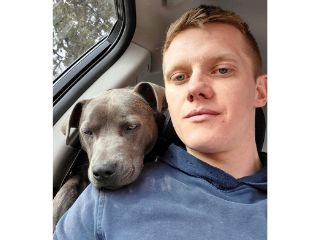 What would you tell someone who might be thinking about enrolling in the Veterinary Assisting program?
Ask yourself why you want to do it and ensure it’s something you love. Visit some veterinary clinics to get a better idea of what the job involves. It’s a field that requires a strong work ethic and commitment. Some people think being a veterinary assistant means you’re working with cats and dogs all day. In some practices, that’s true. But in others, you’re caring for everything from horses and donkeys to goats and reptiles. You have to love all animals and can’t be afraid to get dirty. You’re going to get peed on, pooped on, spit at, and bitten. If the sight of blood or vomit bothers you, it’s not the right job for you. But if you can handle all of that, it’s a rewarding career where you’ll know you’re making a real difference every day.