
 When Sara Kendrick first considered extending her education to become a Registered Nurse, she was a single mom with a young son and daughter, trained as a Pharmacy Technician but working at a school and barely making ends meet. She knew her family would have a big adjustment to make and give up a lot of what they enjoyed during the months it would take for her to complete Carrington College’s Associate Degree in Nursing program. Could she ask them to sacrifice so much? “Education is a hard road, but being a single mom with a minimum wage job is also hard,” Sara offers. “Choose what kind of hard you want; the time is going to pass regardless. Sacrifice, in the long run, was definitely worth it for me and my family.” Sara had a vision…and a plan.
Why choose this time to go back to college?
I was working at a school and was just tired of not having enough money – ever. And my boyfriend (now husband) encouraged me to go back to school. The pandemic hit and I had to stay home with the kids. If I was going to go to nursing school, that was the time to do it. All my classes were online, so I could be in class while my kids were also in class online.
What was your primary motivation to expand your education?
I wanted to go deeper into the medical field. I knew I was a good student because in my previous Pharmacy Technology program I graduated at the top of my class with a 4.0 GPA. I also wanted to be a good role model for my children. I wanted my daughter to know that no matter what, an education can’t be taken away from you. I wanted my son to know what a strong woman is, how to appreciate one and not be intimidated.
What kinds of sacrifices did your family have to make?
I had ‘the talk’ with my kids about how everything I was doing was so that they could have a better life. I told them I wouldn’t be as available for them as they’d been used to. I was still able to be ‘Team Mom’ for baseball and softball – and only missed two games throughout the (Associate Degree in Nursing) program. I was able to go to school all day, go to the baseball fields for practices and games, come home, make dinner, then do my homework after they went to bed.
What was the best thing about the Associate Degree in Nursing program at Carrington College?
The reason I went to Carrington was there was not a wait list. There can be a pretty long waiting list for community college and university – and even then, it’s a lottery. And the friendships. No one else ‘gets it’ the way your fellow classmates do when you’re going through this process. I still stay in touch with a handful.
Did you do as well as you had hoped in your program?
I was co-valedictorian, a member of the Student Council, and Class Speaker at our program’s pinning ceremony.
 What career employment direction did you take?
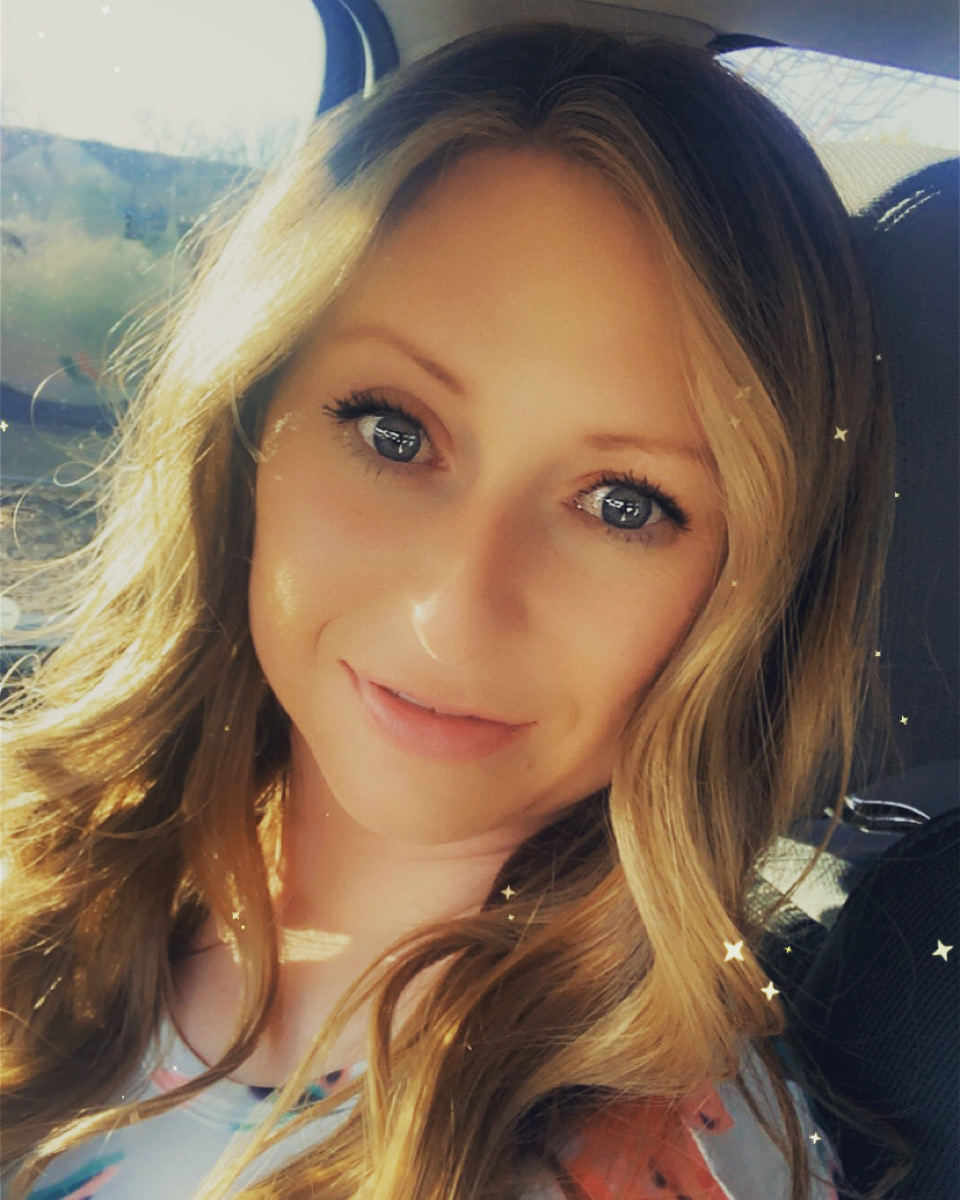 What career employment direction did you take?
I work as a Registered Nurse Case Manager in a hospice environment. I have a caseload of 14 patients right now. All of my patients are terminally ill. It’s a difficult job emotionally, and self-care is important. You have to maintain professional boundaries, but of course you get attached to your patients.
How did you come to work as a hospice nurse?
I went into nursing thinking I would do labor-and-delivery, but I did a clinical rotation (hands-on training during ADN program) at a hospice facility and what I saw wasn’t good. I felt like I could do it better. On another clinical day at a different hospice facility a Nurse Practitioner I was working with was so amazing. She said to me, “I’ve been a hospice nurse for 15-years and I know a hospice nurse when I see a hospice nurse – and you’re a hospice nurse.” It’s definitely a calling to be a hospice nurse; it’s not for everyone. I’m where I’m supposed to be.
What is a hospice environment like?
Hospice is all about death with dignity and allowing patients to have peace, comfort, and a final quality of life. We are taking care of patients that are dying. They’re not going to get better and that’s difficult for a lot of people to process. Nurses can learn medical skills and check them off, but you can’t teach people how to care. You have to slow down, really listen to your patients. They’re going through the hardest time of their lives, and not all nurses can sit and listen to that, be there for that.
What are some of the hardest moments in caring for end-of-life patients?
It’s a difficult job emotionally. Some patients have a lot of anxiety about death, and some are very accepting. They have questions we can’t answer. “How long do I have?” What will it be like?” We try to help them focus on quality of life, rather than quantity of life. It is a privilege to help those patients and their families and be there at the end of their life. But it is definitely not a calling for everybody.
What is your vision for the future?
I’m just enjoying where I am right now. I’m undecided whether I will go back for my Bachelor’s degree in nursing. I’m comfortable financially for the first time. Schedule-wise, timewise – all aspects of life – it’s a good spot right now.